

Shanghai Maritime University
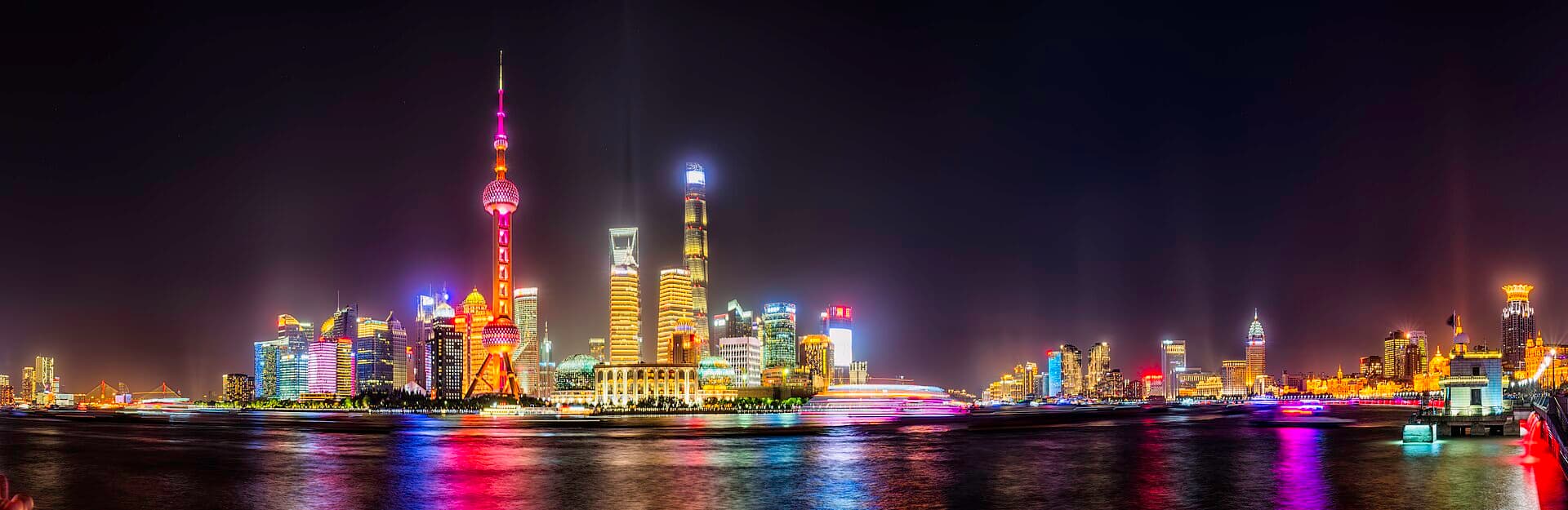
Study city
Shanghai
Coastal megacity · Yangtze Delta
- Humid subtropical · mild winters, hot summers
- Finance, design, and global business
- Metro-first · international neighborhoods
Soft #171
Photo: David Zhang from Canada · CC BY-SA 2.0 · Wikimedia Commons
Shanghai Maritime University
China, Shang Hai Shi, Pu Dong Xin Qu, 海港大道1550号 邮政编码: 201308
About Shanghai Maritime University
Shanghai Maritime University, established in 1909, is situated in Shanghai and focuses on maritime education and research. It offers undergraduate and postgraduate programmes across engineering, management, and science disciplines, with particular emphasis on shipping, logistics, and ocean-related fields. The university operates specialised training vessels and maintains dedicated facilities for marine engineering instruction. Its campus supports a student body engaged in both theoretical study and applied maritime practice. SHMTU’s academic structure includes several schools covering navigation, shipping management, information engineering, and marine sciences.
Available Programs
35 programsKey Highlights
China Ranking
#171 in China
Average Tuition
¥25,200/year
Programs Offered
35 programs across various disciplines
University Information
Ranking
#171 in China
Location
Shanghai
Programs on this site
35 programs
Related Universities
Explore other universities you might be interested in
University of Shanghai for Science and Technology
Founded in 1906, the University of Shanghai for Science and Technology is located in Shanghai and offers undergraduate, master’s and doctoral programmes across engineering, science, management, economics, literature and medicine. It comprises multiple schools including Optical-Electrical Engineering, Mechanical Engineering, and Environmental and Architecture Engineering. The university has a student population of over 24,000 and has awarded degrees to more than 100,000 graduates since its establishment. Its academic focus centres on applied science and technology, with longstanding strengths in instrumentation, thermal engineering, and optical systems. Campuses are situated across urban and suburban areas of Shanghai, supporting both teaching and industry-linked research activities. The institution maintains a tradition of integrating technical education with broader disciplinary perspectives.

Donghua University
Donghua University (DHU) in Shanghai, founded in 1951, is a Ministry of Education university known for fashion design, textile engineering, and information technology. It has long hosted international students from many countries. Degree pathways span design, textiles, materials, and related engineering and management fields.
Shanghai Polytechnic University
Shanghai Polytechnic University, founded in 1960, is located in the Jinqiao Industry Park of Pudong New Area, adjacent to the Shanghai Pilot Free Trade Zone. It offers bachelor’s degrees in 37 fields and higher vocational diplomas in 30 fields, with instruction primarily in Chinese. The university has approximately 12,000 full-time students and around 1,100 faculty and staff. Since 2011, it has enrolled international students from Europe, Asia, Africa, and Oceania. Its facilities include 44 standard laboratories and an Experimental Teaching and Practical Training Center covering 40,000 square metres. Degree programmes are delivered across six academic disciplines, including engineering, economics, management, humanities, science, and art.
Asia Europe Business School
Asia Europe Business School (AEBS) was founded in 2015 by East China Normal University and emlyon business school, with partners including Minhang District and Shanghai Zizhu Hi-Tech Zone. Based in Zizhu International Education Park in Minhang, Shanghai, it focuses on cross-border business education and draws teaching support from emlyon, ECNU, and AEBS faculty.
Shanghai DianJi University
Shanghai DianJi University (SDJU) traces its history to 1953. It is a public university oriented toward advanced manufacturing and modern service industries, with engineering as its main focus and coordinated development of economics, management, literature, art, and science. SDJU has two campuses, Lingang and Minhang, totaling nearly 200 acres, and more than 13,000 full-time graduate and undergraduate students. Graduate programs include energy power, international business, electronic information, machinery, materials and chemicals, and control science and engineering (6 programs). There are 43 undergraduate specialties: engineering about 61%, management and economics about 33.4%, and arts and fine arts about 5.6%. SDJU was among the first nationwide CDIO pilot universities and among the first model universities in Shanghai for innovation and entrepreneurship education reform
Shanghai Normal University
Shanghai Normal University (SHNU) is a key comprehensive local university in Shanghai with a strong tradition in teacher training and liberal arts. It confers doctorates in 6 first-level, 42 second-level, and 2 self-owned disciplines; runs 6 post-doctoral stations; and grants master’s degrees in 29 first-level, 154 second-level, 2 self-owned, and 10 professional disciplines. Bachelor’s degrees are offered in 84 disciplines across Philosophy, Economics, Law, Education, Literature, History, Science, Engineering, Management, Agronomy, and Art. Full-time faculty: over 1,713, including more than 260 professors, more than 533 associate professors, and 567 with doctorates. Part-time faculty: about 580, including 5 academician-level distinguished professors and more than 100 foreign teachers. Research and discipline platforms cited include one national key discipline, one MOE key research base of humanities in local universities, one municipal key laboratory, 3 E-research institutes, 13 municipal key disciplines, 15 key disciplines under the Shanghai Education Commission, 3 local-university humanities research bases, 2 key Shanghai laboratories, and one Shanghai Education Commission key laboratory. Chinese Linguistics and Literature is part of a National Social Discipline and Scientific Research Base cultivation program )